People with Purpose: Libby Thorson-Kahl
Libby Thorson-Kahl believes that where compassion leads, connection follows.
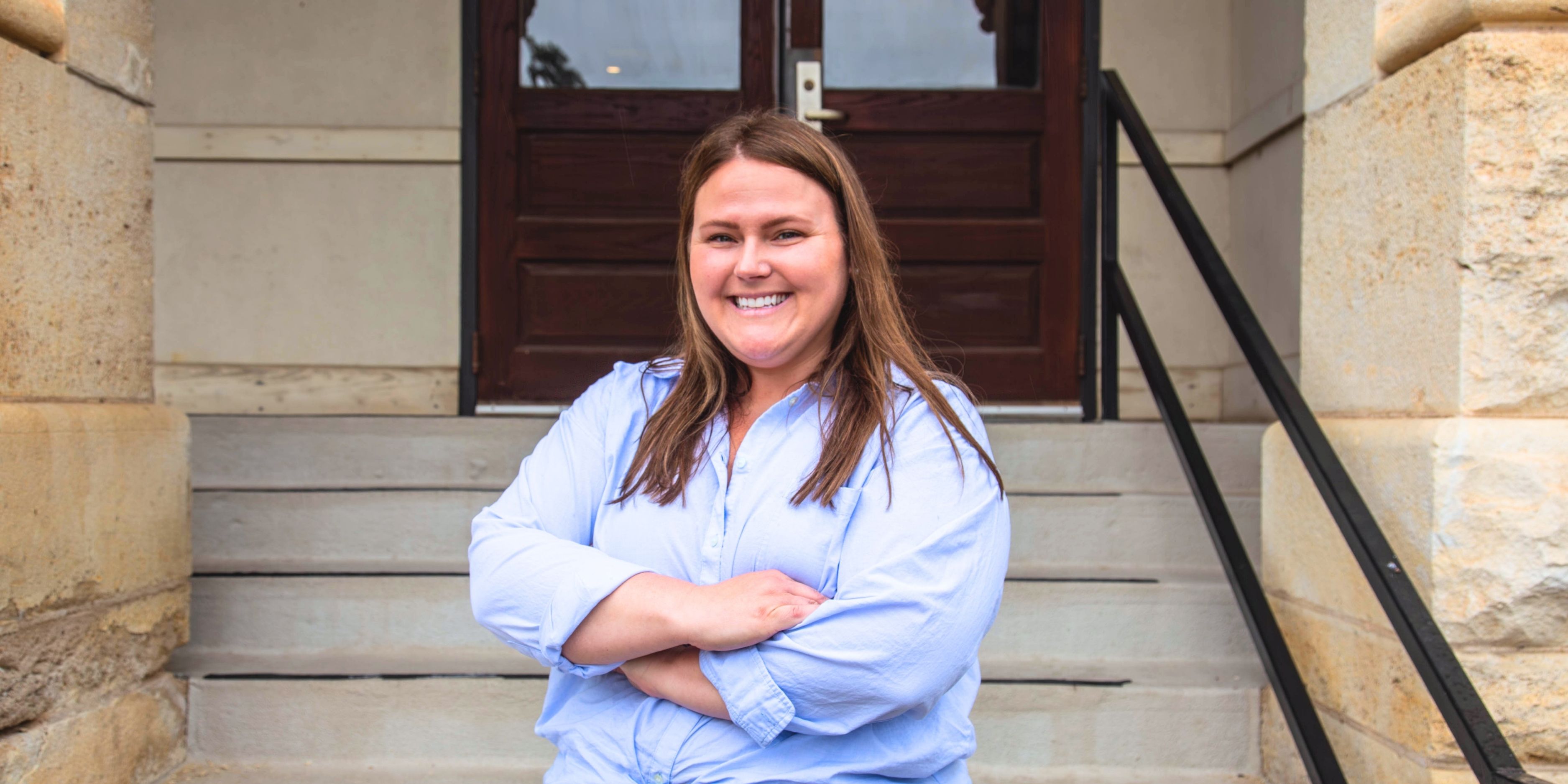
By Abbigail Marshall
News and Communications Services
Monday, June 15, 2026
When students don't know where to turn, Libby Thorson-Kahl helps turn overwhelming moments into manageable next steps.
Thorson-Kahl — assistant director for the Center for Advocacy, Response and Education, or CARE — helps shape programming that provides confidential, free and voluntary advocacy services to survivors of sexual and interpersonal violence; finding her purpose in creating space where people feel seen, safe and supported in their choices for the future.
Q: What drives you to do the things you do to support students?
Thorson-Kahl: An education is life-changing, but traumatic experiences can be incredibly disruptive to a student's ability to stay engaged in their academic journey by affecting their sense of safety and stability.
What drives my work is the opportunity to reduce barriers that may force a student to choose between their well-being and education. In my work with CARE, that often looks like helping students navigate overwhelming systems, connecting them to resources and ensuring they are met with compassion and respect.
Q: What piece of advice can you uniquely give?
Thorson-Kahl: Remember that your story has value long before you feel ready to tell it. For many, our sense of self and connection have been shaped by social media, which can create comparisons, isolation and pressure to present a curated version of our lives.
When you begin to share your story, whether in moments of challenge, transition or discovery, you often find that empathy and community follow. And just as importantly, you begin to extend that same empathy to others.
Vulnerability is not about telling everything; it is about choosing to be authentic in ways that allow others to meet us there. That exchange is where community is built.
My advice to students is to start where you are, sharing your story in small, intentional ways. Be honest and vulnerable, trust that your experiences matter and notice what becomes possible when honesty creates space for connection. Often, the stories we are most hesitant to tell are the ones that most deeply remind us we are not alone.
Q: What motivates you on challenging days?
Thorson-Kahl: On challenging days, I'm motivated by two things: hope and the reminder that this work is ultimately about people feeling seen, believed and supported during moments of fear, overwhelm or uncertainty.
In our work, we don't always see immediate outcomes for students or clients, but I hold onto the belief that even small moments of support can have a lasting impact. The hope that what we do matters, even in quiet ways, keeps me grounded.
I'm also deeply motivated by the team I get to work alongside! Our student employees and advocates show up with care, empathy and a genuine commitment to supporting others. Their presence, energy and dedication make even the hardest days feel purposeful. They make me laugh on hard days, and I love watching our student employees grow during their time working for CARE. Together, those things remind me why this work matters and why it's worth continuing to show up.
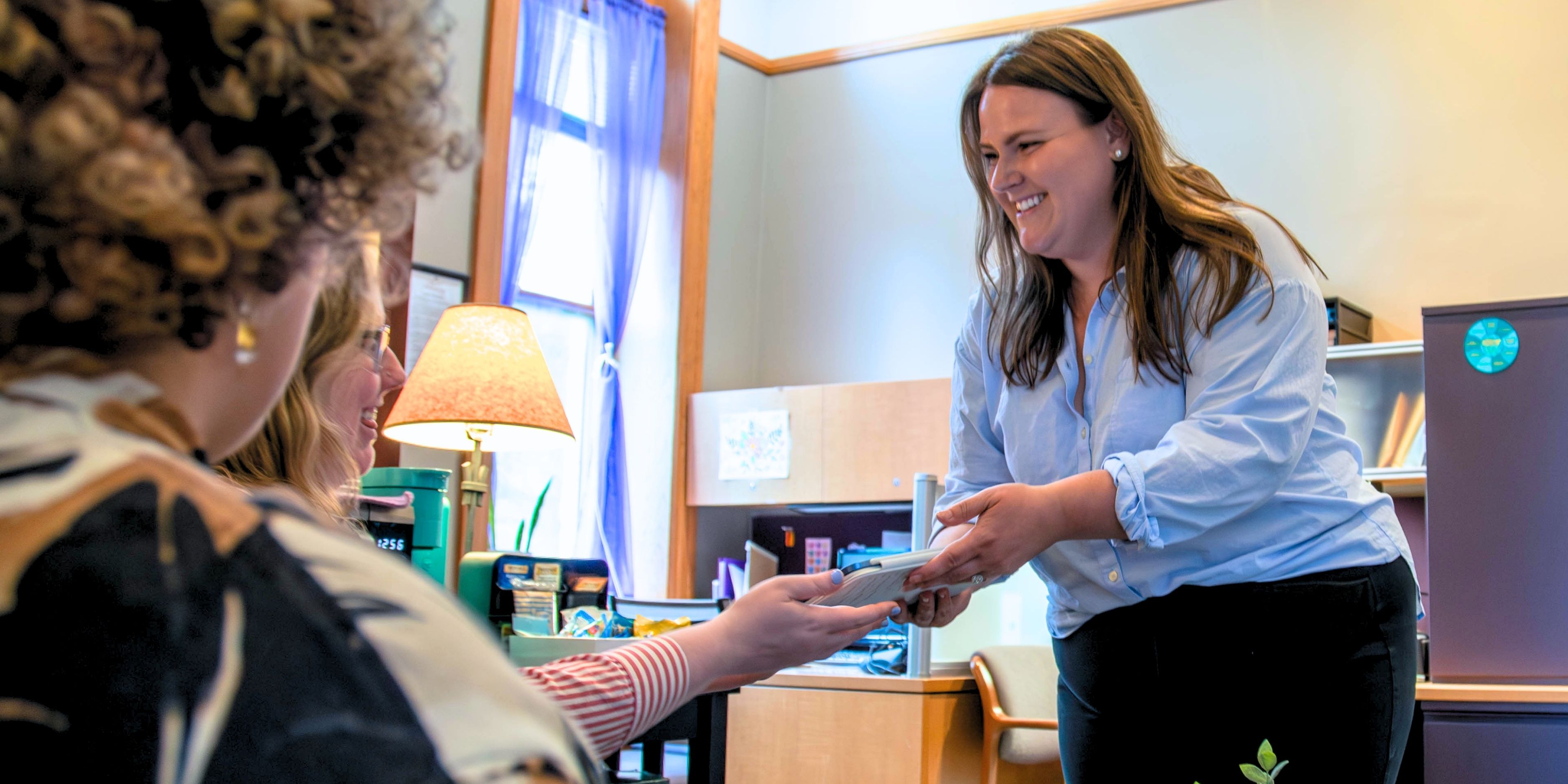
“In our work, we don't always see immediate outcomes, but I hold onto the belief that even small moments of support can have a lasting impact. ”
Thorson-Kahl
Q: What's a moment you've seen while working at K-State that makes you proud to be a part of this campus?
Thorson-Kahl: There are many things I've seen since joining K-State in August that make me proud to be part of our campus, but the CARE student employees make me proud every day. Seeing how K-State offers students hands-on learning experiences, and the funding we receive from Student Government to support student employees, is amazing.
The best parts of my day are being able to observe students handle a phone call or client walk-in appointment, develop a new tabling concept or simply hear about what is happening in their lives. Because of them, every moment at K-State is one I'm proud of.
Q: What do you hope your K-State legacy will be?
Thorson-Kahl: I believe firmly in "leaving something better than you found it." When I joined the CARE team, that meant making intentional investments in both the space and the experience — clearing out outdated materials, rethinking our intake process, creating a softer, more trauma-informed environment, and strengthening our outreach and student employment experience.
While seemingly small, those changes shape how students feel when they walk through our doors. I hope my legacy is that the people I worked with and the students I served felt seen, supported and genuinely cared for. I hope that CARE was a place where they were believed, where their voices mattered and where they had options during difficult moments.
I also hope the students I've worked alongside, especially our student employees, carry forward a sense of empathy, confidence and commitment to supporting others and recognize how their time in CARE prepared them for what comes next. If, in some small way, the work I've done helped someone feel less alone or more able to continue their path, that would be enough.
Related Stories
People with Purpose: Lonnie Hobbs Jr.
Lonnie Hobbs Jr., assistant professor of agricultural economics, is committed to creating a culture of community at K-State through personal and professional...
People with Purpose: Cassie Jones
Cassie Jones, professor and teaching coordinator of animal sciences and industry, is shaping a stronger future for agriculture by building confidence in the...
People with Purpose: Dan Ireton
As an academic services librarian, Dan Ireton believes meaningful research begins when students feel comfortable enough to ask questions.