K-State field days connect deep roots of western Kansas research to modern solutions for producers
Aug. 25-27 events in Garden City, Hays and Tribune will highlight long-term research, timely product evaluations and the latest crop and livestock management strategies

By Kelsey Stremel
College of Agriculture
Tuesday, Aug. 4, 2026
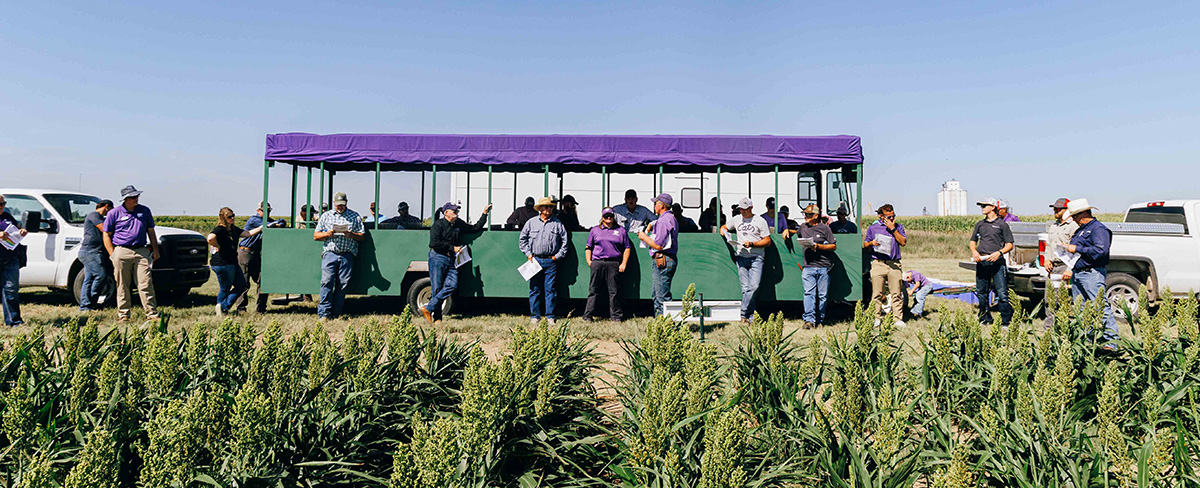
For more than a century, Kansas State University research fields across western Kansas have weathered drought, hail, shifting markets, new technologies and changing production practices.
The questions have evolved, but the purpose of the research has remained constant: to develop locally tested knowledge that helps people make better decisions, manage risk and build stronger farms, families and communities.
Producers, crop consultants, agricultural industry partners and community members are invited to see that work firsthand during the 2026 K-State Western Kansas Research-Extension Centers field days on Aug. 25-27 in Garden City, Hays and Tribune.
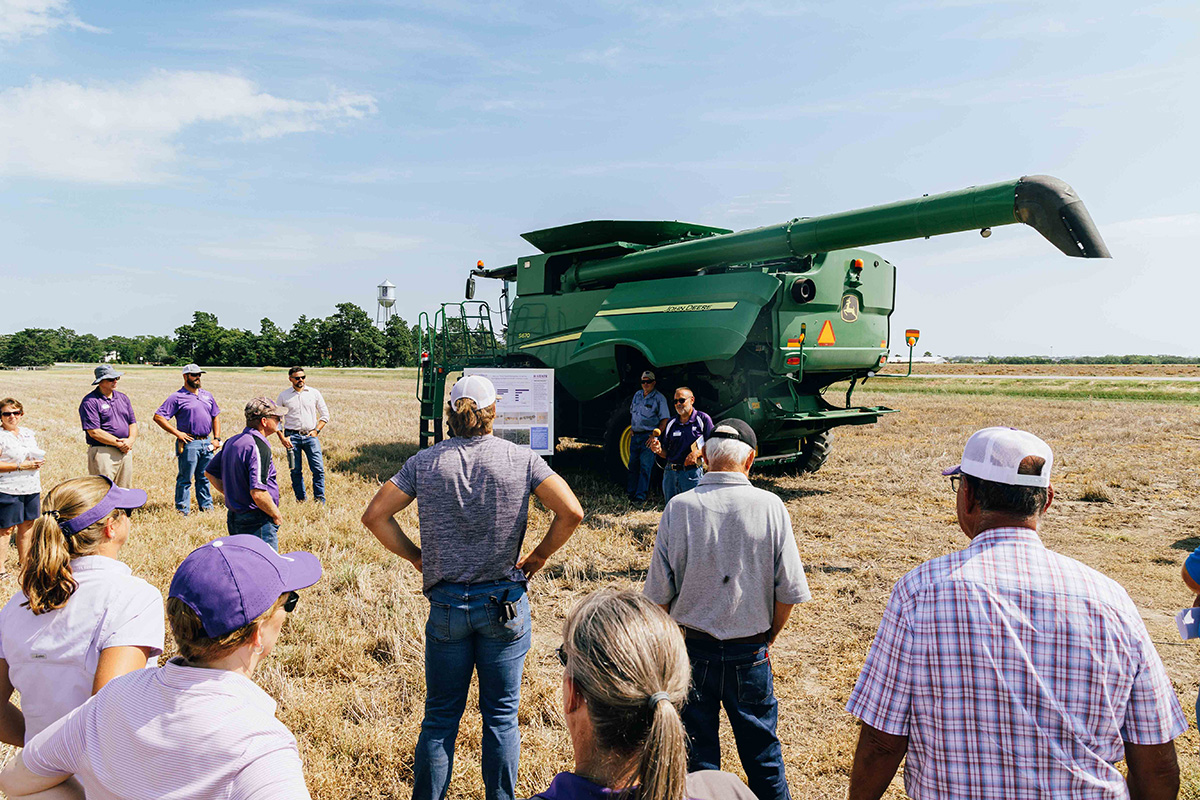
K-State field days bring university and community experts together to address pressing agricultural challenges
K-State's agricultural research roots in western Kansas stretch back 125 years. The Fort Hays Branch of the Kansas Agricultural Experiment Station was authorized in 1901, followed by the Garden City station in 1907 and the Tribune station in 1911. Today, those locations work collectively through the K-State Western Kansas Research-Extension Centers, or WKREC, to address agricultural production challenges under the region's distinctive soils, climate and water conditions.
"Research and Extension are deeply interconnected," said Brian Olson, head of the K-State WKREC. "Research helps us build the evidence, K-State Extension puts that knowledge into people's hands, and conversations with producers help shape the questions we study next. Field days bring that entire process together."
Some of that research spans decades, revealing how production systems perform across drought, favorable weather and everything in between. Other work is short-term by design — independent evaluations of new crop protection products, technologies and management practices producers may be weighing this season.
"Producers need long-term evidence, but they also need unbiased information about the decisions in front of them right now," Olson said. "Field days let them hear the latest findings, see the work in the field and talk directly with the researchers doing it."
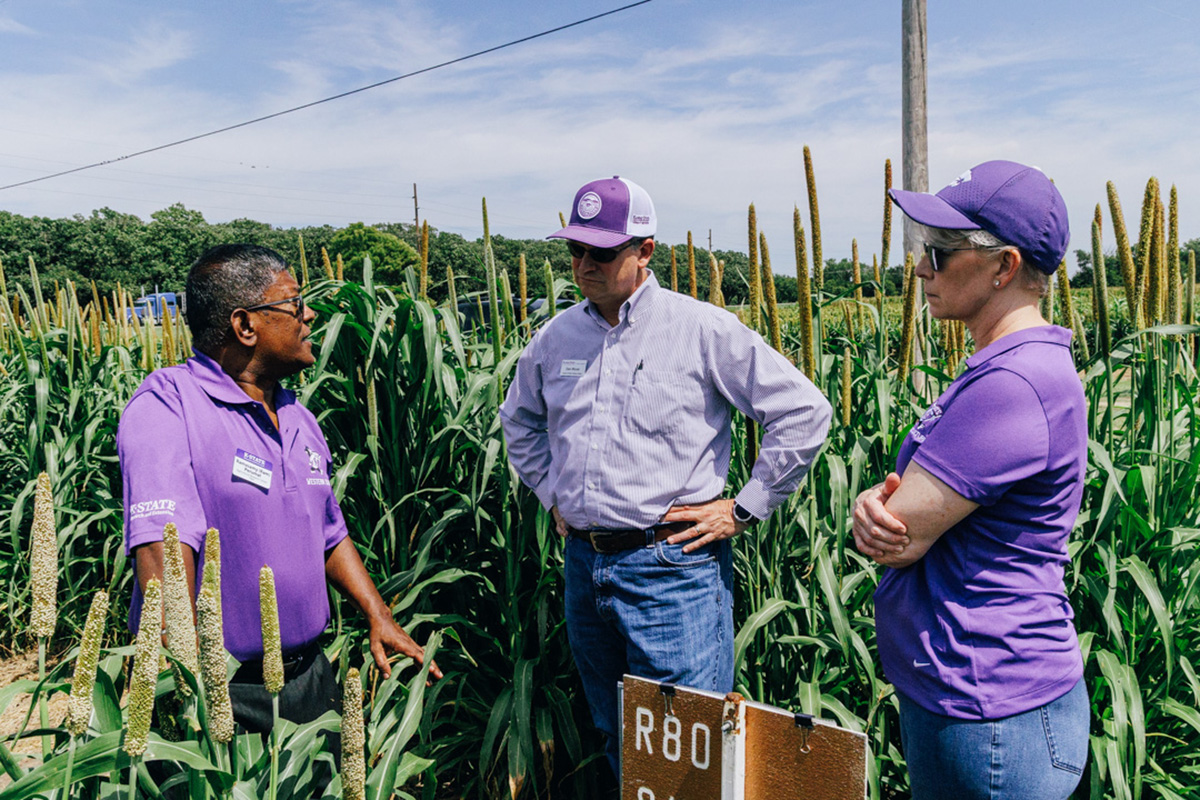
Studies across the Sunflower State improve growing practices
One long-term study examining occasional tillage in a wheat-sorghum-fallow rotation began at Garden City and Tribune in 2014 and at Hays in 2015. Researchers have compared no-till systems with one or two strategically timed tillage operations to determine whether occasional tillage could help manage herbicide-resistant weeds without sacrificing crop yield.
Results have differed by crop, year and location. Tillage during the fallow period increased wheat yields in many years at Garden City, while wheat yields at Hays and Tribune generally did not differ among treatments. At Tribune, grain sorghum performed best in the no-till system.
The variation demonstrates why research conducted over time and across locations is important before broad recommendations are made.
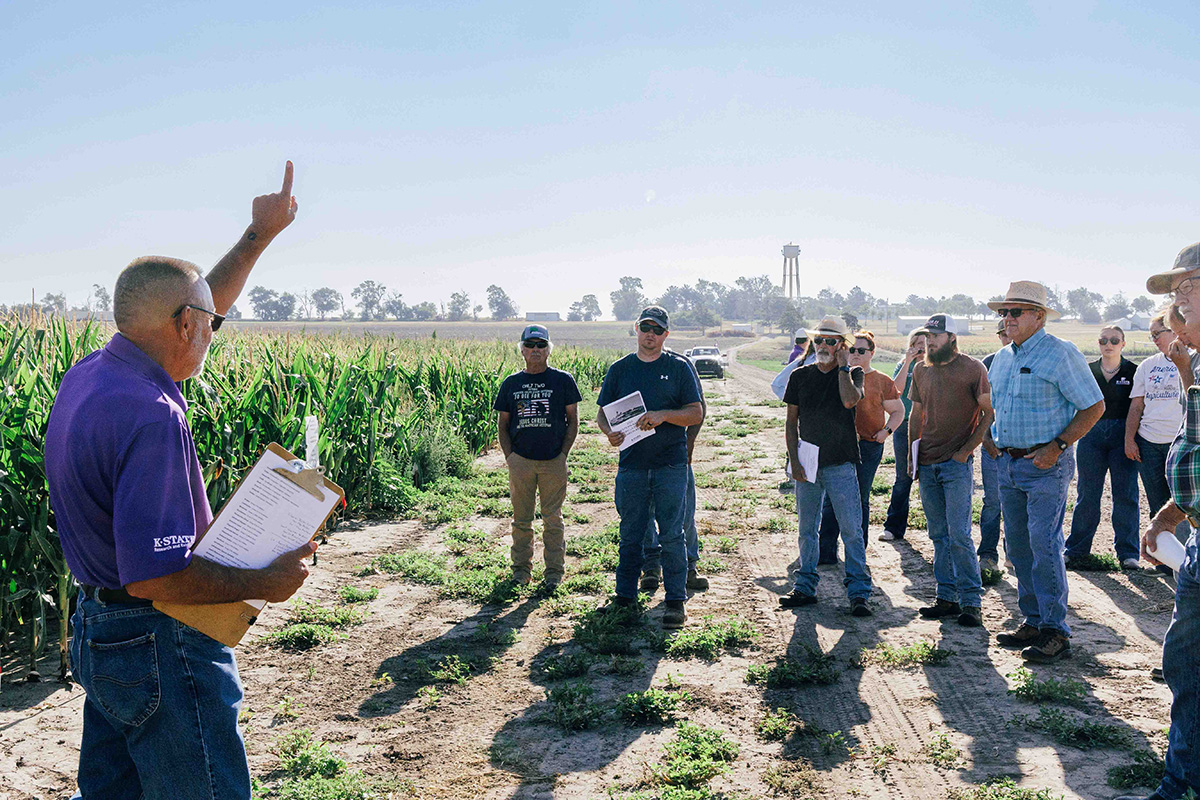
Strategies for narrow growing seasons
Newer studies respond to emerging production questions. In Garden City, researchers are evaluating cotton varieties and deficit-irrigation strategies for southwest Kansas' narrow growing season.
The first year of the study found that modest irrigation beyond the initial application at planting increased lint yield, but well-distributed rainfall may have masked differences among irrigation timings. Continuing the work across seasons and a wider range of weather conditions will help researchers determine which strategies perform consistently and provide producers with more reliable, locally relevant recommendations.
"Southwest Kansas doesn't leave cotton much room for error because of our short growing season," said Logan Simon, K-State southwest area agronomist. "We want producers to take advantage of rainfall when it comes and irrigate only when it will pay off in yield. This study is helping us identify that timing so they aren't running a pivot when Mother Nature and the crop have already provided what is needed.”
Building biostimulant best practices
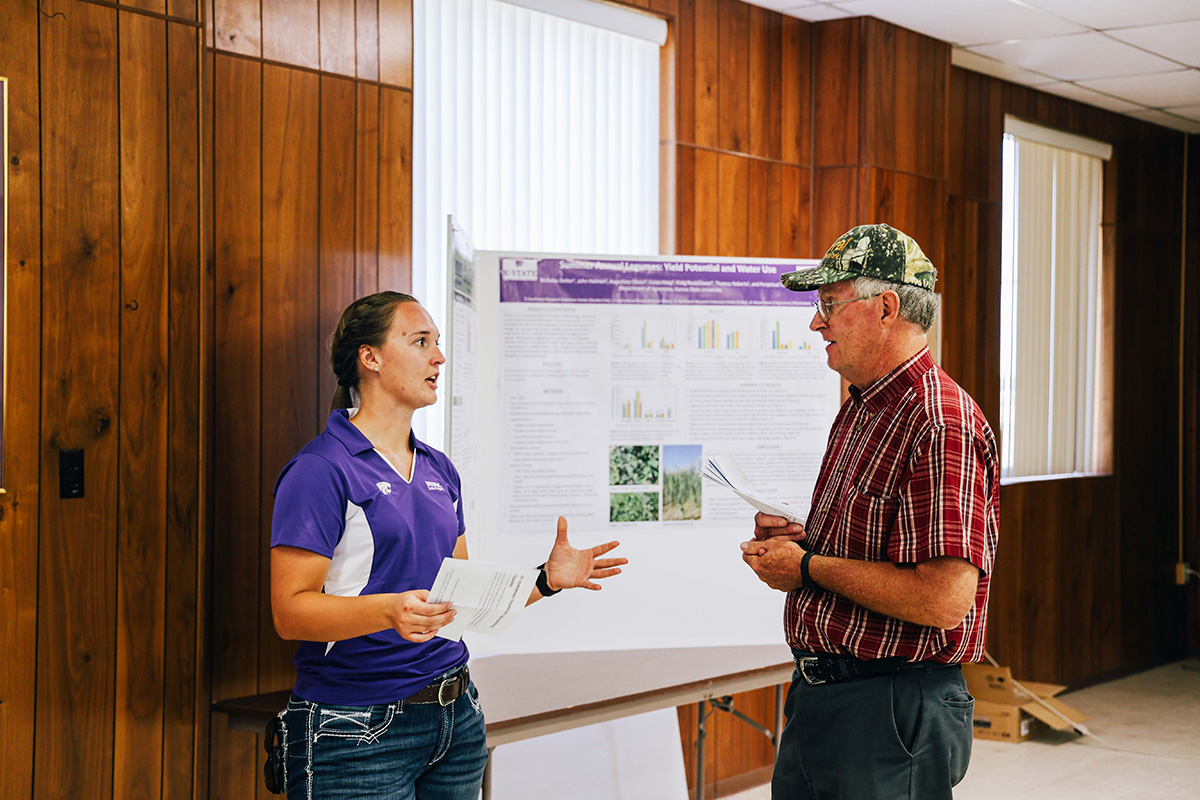
In Hays, a 2025 study evaluated whether commercially available biostimulants could improve dryland grain sorghum production.
Results showed that adequate nitrogen fertility was the primary factor influencing yield and plant nutrient content. Some products showed potential benefits when sufficient nitrogen was available, but the results indicated that biostimulants should be viewed as a possible supplement to, rather than a replacement for, sound nitrogen fertility management.
"Biostimulants can play a role, but they're not a substitute for meeting the crop's basic fertility needs," said Augustine Obour, K-State soil scientist. "Producers considering these products should start with a solid nitrogen fertility management program and treat biostimulants as one more tool, not the foundation."
K-State field days coming to western Kansas in late August
These studies are only a sample of what will be shared during upcoming field days in Garden City, Hays and Tribune, which will also cover short-term herbicide and product trials, weed-management strategies, water and nutrient management, forage and livestock research, and emerging precision-agriculture technologies.
Research helps us build the evidence, K-State Extension puts that knowledge into people's hands, and conversations with producers help shape the questions we study next. Field days bring that entire process together.
Advance registration is requested to assist with meal and program planning. For complete agendas, registration and additional information, visit wkrec.org/events.
Garden City field day: Aug. 25
The K-State Southwest Research-Extension Center Fall Field Day Plus will be held Tuesday, Aug. 25, at 4500 E. Mary St. in Garden City.
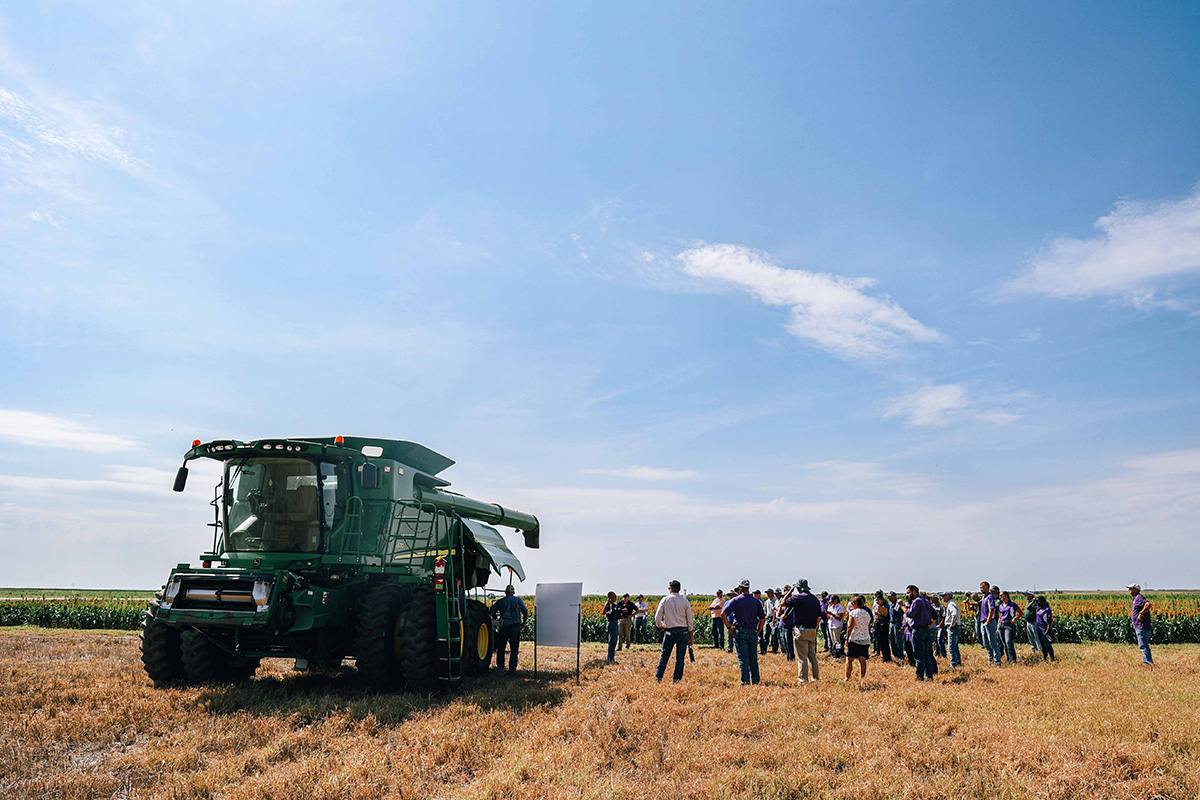
Registration and exhibitor displays open at 8 a.m., followed by a welcome and field tours beginning at 9 a.m. The field-tour rotations will feature research on weed management in corn and grain sorghum, alternative summer legumes, long-term hay and silage variety performance, biostimulants, water dynamics in corn-cotton rotations, real-time drone streaming, cotton variety and irrigation management, and directed-energy technology for weed control.
Lunch and indoor presentations will follow, including sessions on water-resilient alfalfa production, corn and sorghum insects, and pesticide-applicator training. Continuing education credits are available for commercial pesticide applicators and certified crop advisers.
Hays field day: Aug. 26
The Agricultural Research Center-Hays Fall Field Day will be held Wednesday, Aug. 26, at 1232 240th Ave. in Hays.
Registration begins at 8 a.m., with field tours starting at 9 a.m. Presentations will address nitrogen management, enhanced-efficiency fertilizers and biostimulants in grain sorghum; crop productivity, profitability and soil health in integrated crop-livestock systems; pearl millet forage value; finishing beef cattle research; and residual herbicide programs.
Lunch will be served at 12:30 p.m. Indoor presentations and a graduate student research poster competition will begin at 1 p.m.
Tribune field day: Aug. 27
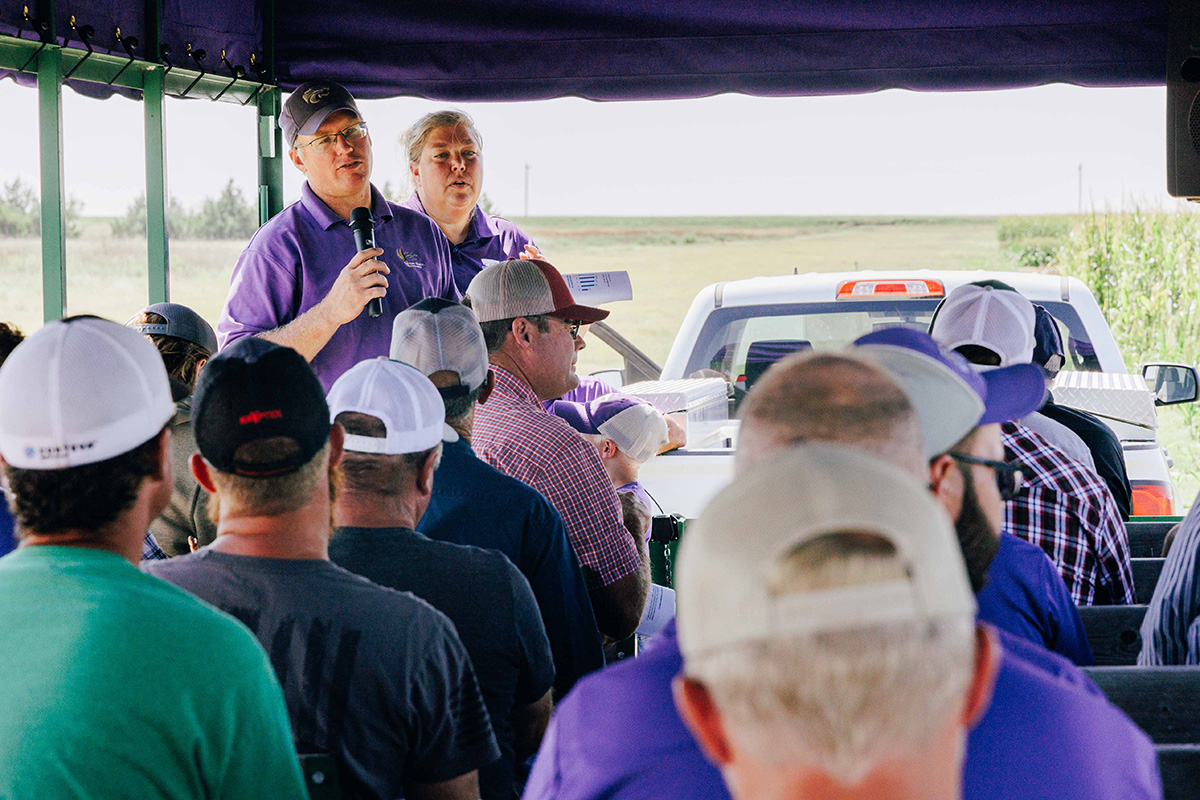
The Tribune Fall Field Day will begin at 8:30 a.m. Mountain time Thursday, Aug. 27, at the K-State irrigation research field near Tribune.
Topics will include nitrogen management in dryland sorghum, advances in managing iron chlorosis, micronutrients in forage sorghum, limited irrigation of forages and managing corn hybrids with limited water.
Lunch and a brief preplant wheat school will follow at the Greeley County fairgrounds. The wheat program will cover variety selection and seeding-time management.
###
Related Stories
K-State conducts regenerative agriculture research alongside Kansas farmers
As K-State works to advance agriculture, it leverages a network of Kansas farmers, known as the Kansas Soil Health Network, to conduct soil research at seven...
K-State graduate student explores cattle grazing as invasive grass management tool
Tasha Macholan is studying whether one routine management decision — where producers place cattle supplement — could improve calf performance while helping...
Residents rally to rebuild grocery store in Dighton
When Dighton's only grocery store was destroyed by fire, residents faced long drives for basic necessities. A community-led effort, supported by K-State's Rural...