'Collaborative in nature'
K-State professor creates Flint Hills-focused architectural installation through local fellowship

By Abbigail Marshall
News and Communications Services
Friday, Sept. 11, 2026
MANHATTAN — When Ursula Emery-McClure moved to Manhattan in 2023, she had no idea about the remarkable, unseen world beneath the Flint Hills.
Beneath sweeping grasslands and grazing bison, stories of the tallgrass prairie are tucked underground — narratives of strength and renewal, woven among roots stretching deep into Kansas soil.
Three years later, what she discovered beneath the prairie became the inspiration for one of her most ambitious creative architectural research projects yet.
Learning the landscape
Although the Kansas grasslands were unfamiliar to her, Emery-McClure — associate professor in the GE Johnson Department of Architectural Engineering and Construction Science — has long focused her architectural work on natural landscapes. Throughout her career, spanning more than 30 years, her core explorations have centered on how history and environmental context shape physical spaces and cultural identities.
Before coming to Kansas, much of that work took place in Louisiana, home to one of the country's most distinctive and biologically rich ecosystems — the wetlands. Living and working within a culture deeply shaped by its landscape led Emery-McClure to consider a broader question: How do unique environments shape the lived experiences of the people who call them home?
That question followed her to Kansas.
In fall 2023, Emery-McClure moved to Manhattan to begin working at K-State. Having never visited the community before, she didn't know she was about to find herself in the heart of another distinctive ecosystem — the Flint Hills.
"What a surprise to move from one unique ecosystem and land straight in the heart of another," Emery-McClure said. "It felt like an act of fate."
For Emery-McClure, getting to know a new place came instinctively. As she had many times before, she immersed herself in the surrounding culture and landscape, a pursuit that eventually brought her to the Volland Foundation.
Research roots
The Volland Foundation Residency program — which entered its eleventh year in 2026 — brings creatives across disciplines to the Flint Hills to live, work and study on its Alma-based campus. During their two- or four-week residency, participants draw inspiration from the surrounding remote landscape, creating work that encourages education and collaboration centered on the ecosystem.
In other words, it was the perfect fit for Emery-McClure's research.
Upon being accepted, she immediately began developing a creative plan for her residency, determined to make the most of her four weeks on the Volland campus. Although the program doesn't require residents to leave with completed work, Emery-McClure had every intention of doing just that.
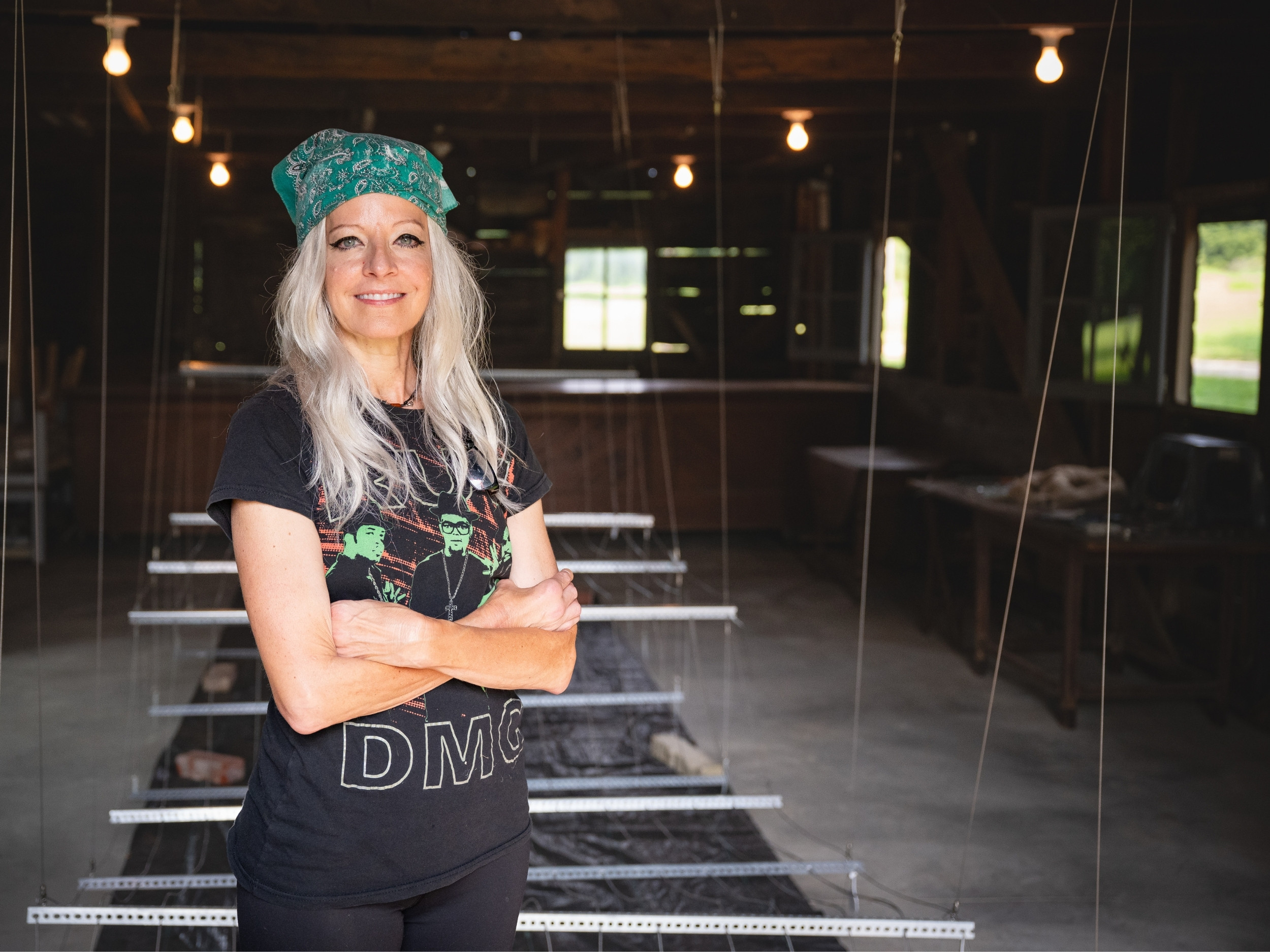
“As an architect, my entire creative and professional world revolves around the relationship between people and their surrounding environments. I couldn't leave without having something tangible for the community to interact with at the end.”
Ursula Emery‑McClure
In preparation for the residency, Emery-McClure devoted uninterrupted time to studying the prairie and looking beyond what could be seen on its surface.
Leading a collaborative investigation with her co-led firm, emerymcclure architecture, and university colleague Katie Loughmiller, department head and professor in the GE Johnson Department of Architectural Engineering and Construction Science, she dove into each uniquely important part of the ecosystem.
As she explored its history, ecology and cultural significance, one element continually drew her attention underground: the roots.
To Emery-McClure, the hidden root systems of the Flint Hills — holding together the grasslands through cycles of fire, drought and growth — reflected something distinctly human: the relationships and connections that allow Kansas communities to endure, too.
Once that idea took root, there was little slowing it down.
Planning with purpose
The deeper she dug into research on the Flint Hills, the clearer it became that the prairie couldn't be understood through its roots alone. The ecosystem's resilience depended on an interconnected system of plants, animals, fire, water and soil, with extensive root networks binding it all together.
That understanding gave Emery-McClure the framework for the project: two distinct yet interconnected views of the Flint Hills, one capturing the visible landscape above and another revealing the sprawling root systems beneath it.
Initially, she envisioned bringing that concept to life within the landscape itself. But because of the prairie's protected nature, building directly on the land wasn't an option.
Instead, they would bring the prairie indoors, through "The ROOT Source."
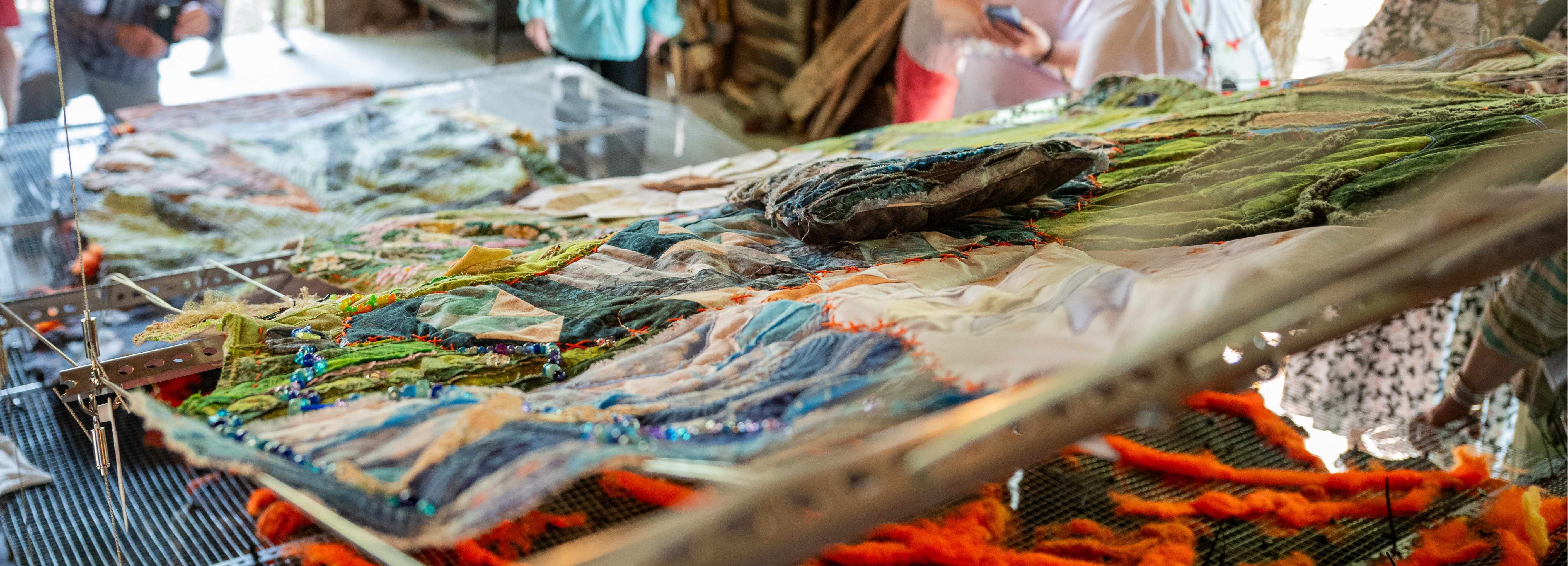
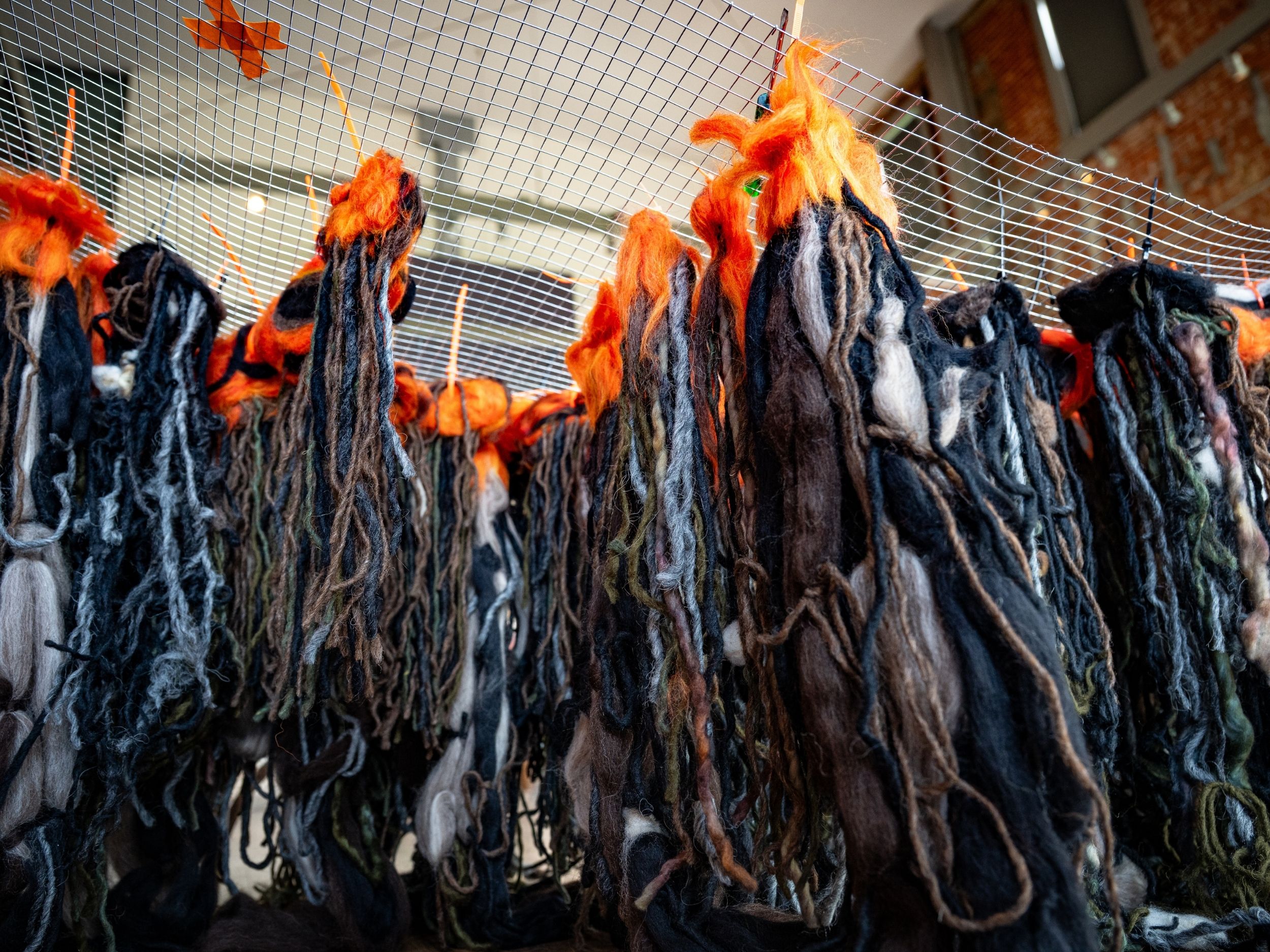
Above ground, a 14-piece block quilt would mimic a map of the Flint Hills, with each block representing an integral part of the prairie and sewn by a different quilter. Beneath it, carefully measured strands of yarn would recreate the root systems underground, suspended from an architectural display structure designed by a collaborative team of architects, landscape architects and designers.
Just as the prairie depended on many interconnected parts, so would the project. Emery-McClure knew each view would require its own creative approach and its own unique contributors.
"I've never sewn or owned a sewing machine in my life," she said. "But I know how to bring people together and tell a story. The work itself and what it represents are collaborative in nature."
Once the structure plan was in place, Emery-McClure and her collaborators turned their attention to coordinating the large team needed to bring it to life.
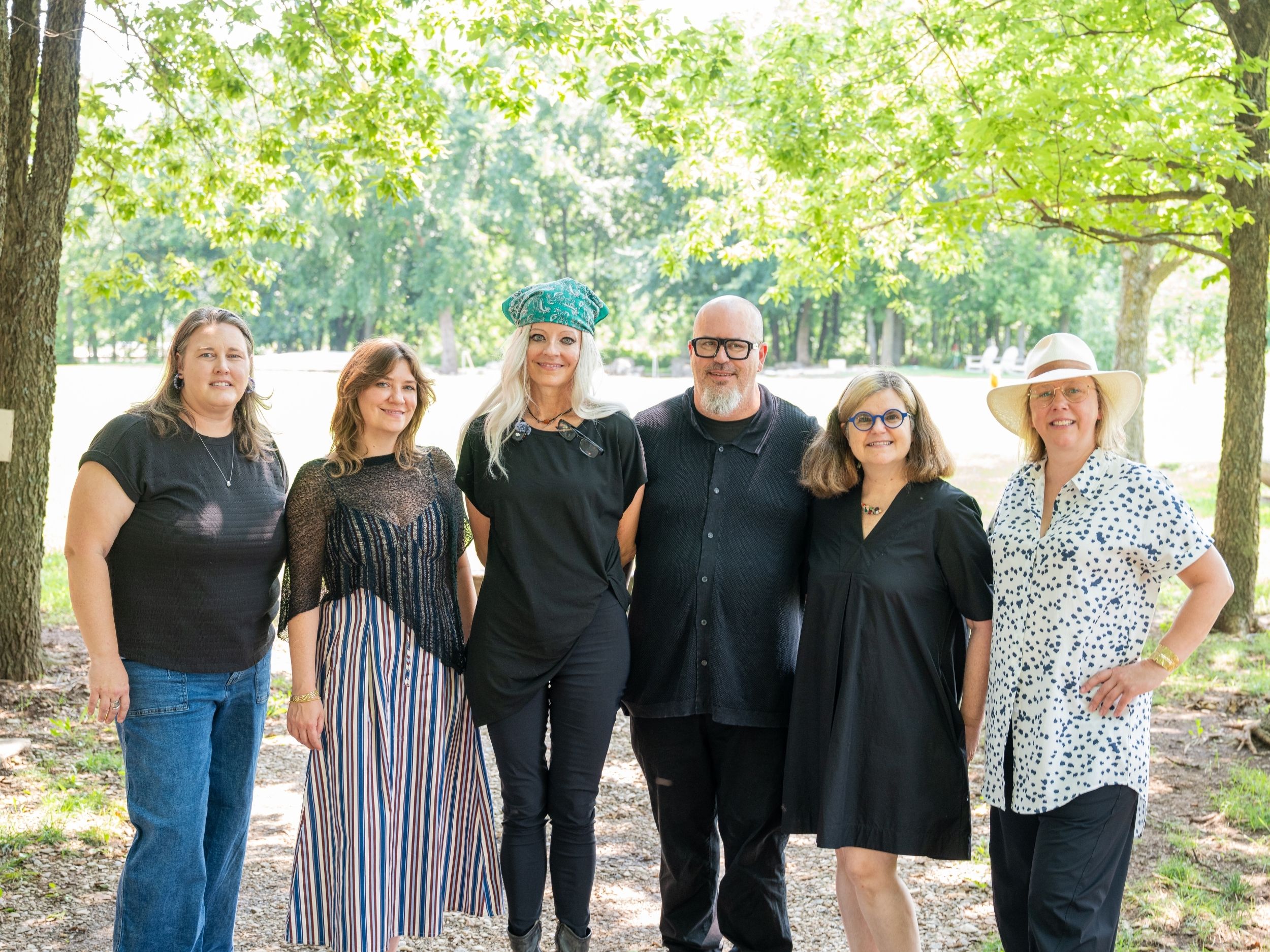
Working with Loughmiller, a Kansas native, they began gathering experts from around the Sunflower State — totaling 14 Kansas quilters, six architectural and landscape architecture colleagues, and members of the firm — to create their final 31-person team.
"It was clear we were seeking to show not only the topography of the different areas, but the spirit of being among the hills," said Kathie Menzie, one of the project's quilters. "Just as the sections of the Flint Hills are unique, the quilters were unique in their ideas and approaches to depicting the land's diversity."
They developed instructional packets for each quilter, detailing individual block assignments, design parameters and how each piece would fit into the final installation. Then, they mailed the packets across Kansas and waited for photos of the finished blocks to arrive.
While the quilt blocks took shape across Kansas, the architectural collaborators worked through another piece of the puzzle: how to construct a hanging display that could showcase both the quilt above and the yarn "roots" extending beneath it.
"It was like a train on tracks with seven diesel engines," Emery-McClure said. "Once it was started, there was no slowing it down."
Their solution was a curved metal frame modeled to follow the longitudinal and latitudinal lines running through the Flint Hills, as well as the corresponding lines of the Kansas township grid. Cow tags marked the lines, while farming wire formed the structure — choices Emery-McClure said were essential to grounding the piece in the communities it represented.
"This is the materiality of the farmers and ranchers that live out here," she said. "It's all intentional and with a purpose. Most people may never know that, but that's how designers work, and it was how we were going to do it. Every fabric, stitch and strand and part of this metal fixture means something."
By the end of July, months of research and planning had produced all the pieces needed to build the installation. The quilt blocks had been sewn, the root systems mapped and the framework designed.
All that was left was to put it together.
'En charette': The final push
That process began Aug. 1, when the quilters gathered at the Volland campus with their completed blocks in hand. Until then, each had worked independently from the instructions mailed months earlier, knowing what their individual block represented but without seeing the finished work around it.
Together, they laid out the 14 blocks for the first time, arranging and joining them to create the larger map of the Flint Hills that would eventually stretch across the top of the installation.
With the quilt assembled, the project shifted into its final week of construction. Emery-McClure and the design team continued testing and refining the metal frame, adjusting as the physical installation took shape.
For Michael McClure, dean of the College of Architecture, Planning & Design and project collaborator, the week leading up to the project's unveiling was when the community it created truly revealed itself.
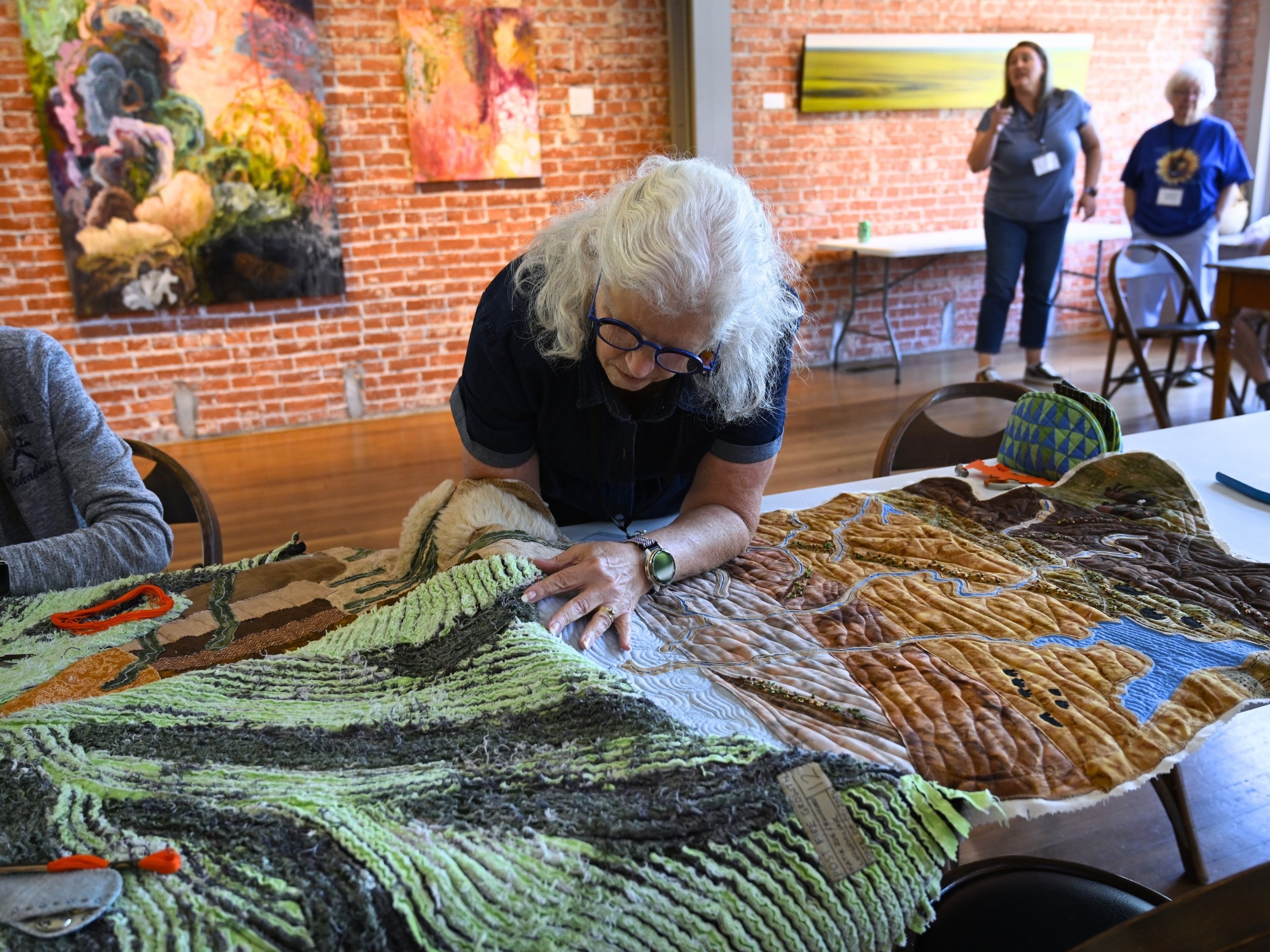
"In the architecture world, we call it a charrette, which is when you have that final push at the end to finish something," he said. "We had a cadre of people who we'd worked with over the years that came in from all over the country to help. Faculty from Ohio State, James Madison University, Savannah College of Art and Design, the University of Louisiana Lafayette — it was remarkable how many people came that last week."
Then came the roots. Using the research and mapping completed earlier in the process, the team began zip-tying strands of yarn to their corresponding locations along the frame. Each strand was measured to represent what was happening beneath a particular section of prairie, gradually filling the open space below the quilt with the dense root systems that had first captured Emery-McClure's attention.
"We gave up a lot of control on this. When you think about the creative act, it's normally a person or team of people having complete control over what they're putting out in the world, " McClure said. "This time, we wrote the recipe, but everyone else got to bake the cake. It was nerve-wracking, but it was exciting, because it meant there had to be trust there."
Day by day, the two views of the Flint Hills came together. Above, the quilt represented the plants, animals, water, fire, soil and other forces visible across the prairie. Below, yarn traces the extensive networks that connect and sustain that life underground. Between them stood a structure built from materials rooted in the landscape itself.
A vision realized
By Aug. 8, Emery-McClure and her collaborators had brought over four months of research, drawings, measurements and individual pieces together into a completed installation — welcoming the community to the Volland Foundation campus for an open house, where Emery-McClure presented the project and shared the process behind its creation.
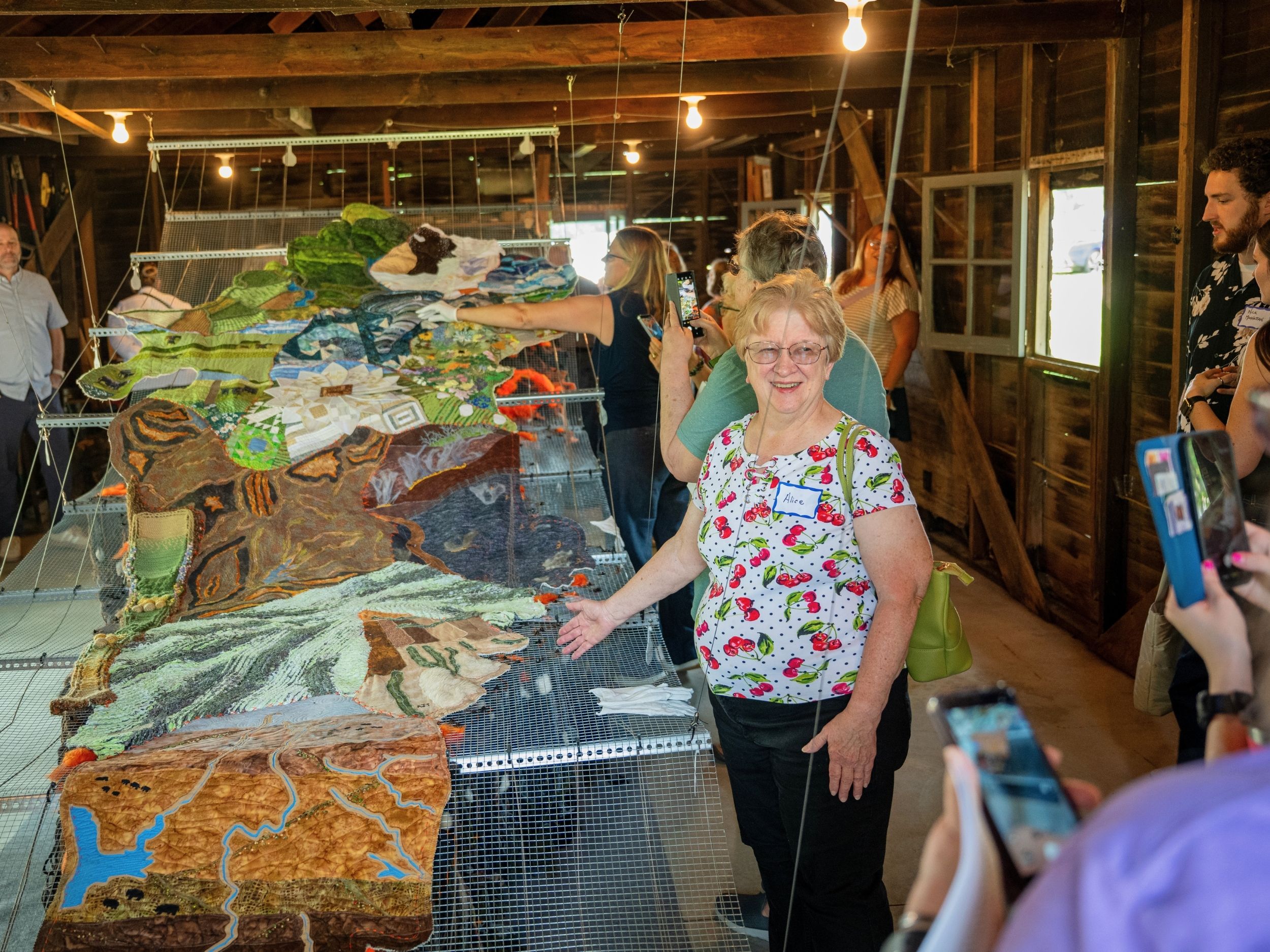
For the first time, visitors could experience the world beneath the prairie, experiencing the hidden parts of the tallgrass they call home and learning about the research, ideas and collaborative process that brought "The ROOT Source" to life.
"With 'The ROOT Source,' Ursula paved a new path for Volland residencies. Long before she stepped foot on campus, she was organizing her team to realize this project," Ryan Jones, co-executive director of the Volland Foundation, said. "'The ROOT Source' reminds us that Kansas and the Flint Hills aren't in the middle of nowhere, but rather, the middle of everything."
The finished installation was the tangible work Emery-McClure had set out to leave behind at Volland, but the process of creating it had given the project another layer of meaning.
Built through the contributions of quilters, architects, landscape architects, designers and community members, it came to reflect the same idea Emery-McClure had first found beneath the prairie: community resilience is rooted in connection, trust and a shared sense of purpose.